
Inside the Blue Mosque: History, Beauty, and What to Know Before You Go


Officially called the Sultan Ahmed Mosque, this 17th-century masterpiece sits directly across from Hagia Sophia, facing it almost like a conversation across centuries. One (the Hagia) was once a church, then a mosque, then a museum, then a mosque again. The other (Blue) has been a mosque from the beginning and still welcomes worshippers five times a day.
And yes, it really is blue. But maybe not in the way you expect.
Why It’s Called the Blue Mosque

The name comes from the more than 20,000 hand-painted Iznik tiles that line the interior walls. They are decorated with tulips, carnations, roses, cypress trees, and geometric patterns, mostly in soft blues with touches of green and white.
The effect is subtle, not loud. As daylight filters through the many windows, the tiles shift in tone throughout the day. Pale in the morning. Deeper by late afternoon. Almost silvery at dusk.
Built to Impress an Empire

The mosque was commissioned by Sultan Ahmed I (at 19 years old) in the early 1600s, when the Ottoman Empire was still powerful but beginning to feel pressure from Europe. He wanted a mosque that would rival Hagia Sophia in grandeur while honoring Islamic tradition.
At the time, the design was controversial. The Blue Mosque was built with six minarets, which matched the number at the Grand Mosque in Mecca. This caused an uproar, and the solution was simple but symbolic. A seventh minaret was added to Mecca, restoring its unmatched status.
Standing in the courtyard today, you can feel that ambition. Everything is symmetrical, balanced, and intentional.
Inside the Prayer Hall

Visitors enter from the side, leaving shoes behind and stepping onto soft carpets that stretch wall to wall. The space opens upward into a cascade of domes, each one leading your eye higher.
The chandeliers hang low, intentionally. In the past they held oil lamps, and the soot helped protect the tiles. Today they glow gently, keeping the space intimate rather than overwhelming.
Even when it is crowded, the mosque never feels rushed. People slow down naturally here and speak quietly.
A Mosque That Is Still a Mosque
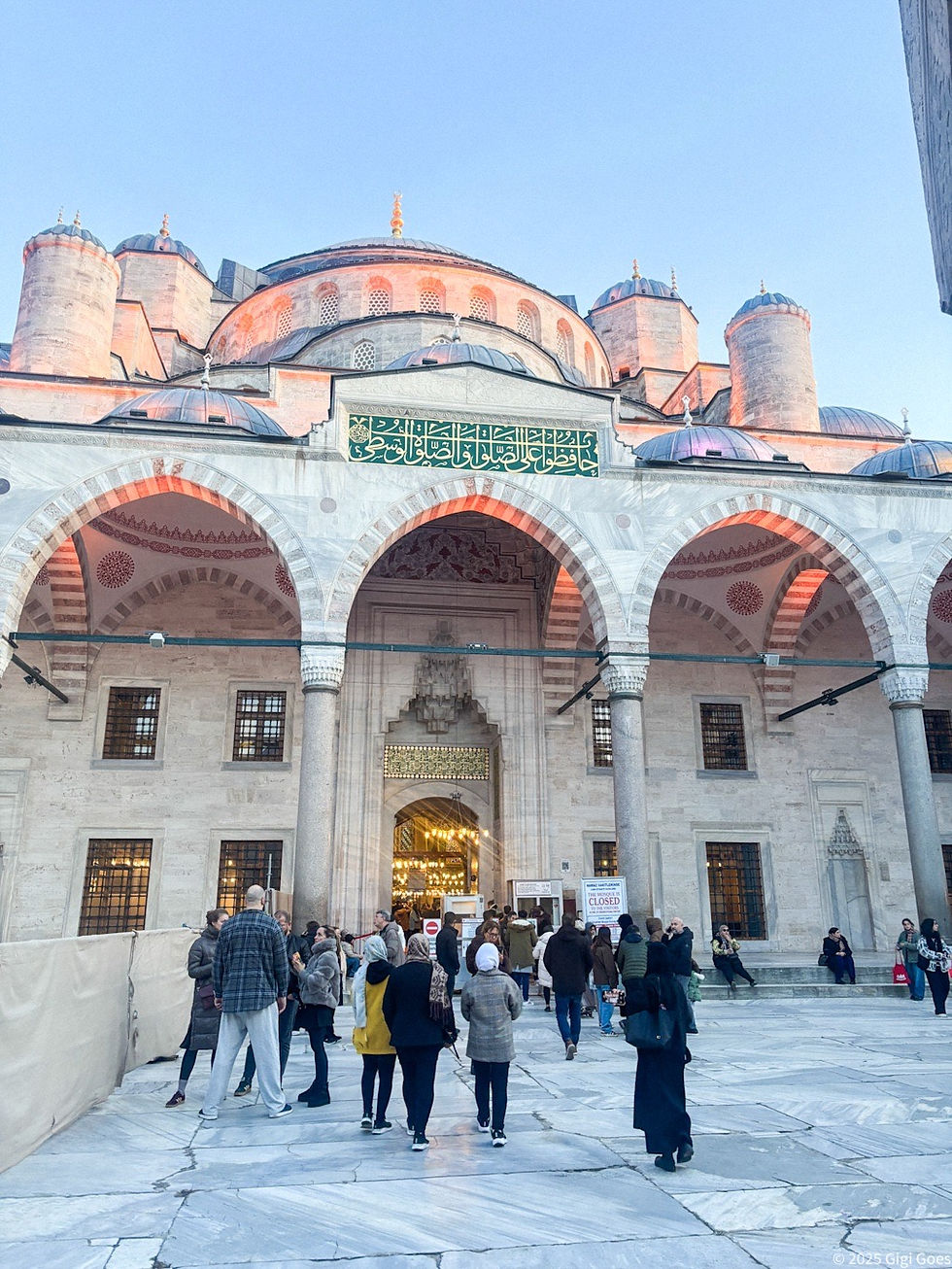
This is not a museum. Prayer continues throughout the day, and visitors are asked to step aside during prayer times. Women cover their heads. Everyone dresses modestly. There is a quiet understanding that you are entering a sacred space, not just a photo opportunity.
And yet, it is incredibly welcoming.
Volunteers answer questions. Locals pray beside tourists. Kids whisper. The rhythm of daily life continues, just as it has for centuries.
Practical Things to Know Before You Go
Entry is free
Closed to visitors during prayer times, but the schedule is posted outside
Headscarves are available at the entrance if needed
Dress modestly, covering shoulders and knees
Best light is mid-morning or late afternoon
Expect crowds, but also moments of stillness
There are many volunteers that are more than happy to answer any questions
Why the Blue Mosque Matters


Istanbul is full of ruins, relics, and remnants of past empires. The Blue Mosque is different. It is not a leftover. It is not preserved behind glass.
It is alive.
You hear prayers echo under domes built four hundred years ago. You walk on carpets where generations before you stood. You leave knowing this place is not just something Istanbul shows you.
It is something Istanbul still uses and it invites you to join in.
Big hugs,
Gigi


Comments